Frederick Douglas is someone who I learned about each year in grade school around January and February, along with Martin Luther King Jr and Rosa Parks. His life never stood out to me in school because it was lumped together with so many other great men and women. It seemed like he was just another abolitionist and could not be as great as someone like Sojourner Truth or Harriet Tubman. Reading the autobiography of Frederick Douglas changed my mind completely.
One of the most interesting parts of his autobiography that stood out to me was when he was talking about the constant singing going on in the plantation. He says, “slaves sing most when they are most unhappy” (937). Whenever I would picture slaves working hard in the fields sweating profusely, I would always imagined them singing joyful songs of things to come. Singing about what they had to look forward to in the afterlife to keep them going everyday. I never imagined that they would sing songs about their daily lives and troubles instead. I guess it makes sense because that is all they know. They do not know much of joy or happiness, but only constant hurt and struggle. I just assumed that because most of the writing from the slaves that I have read was centered on hope and their belief in God, that their act of singing would be the same. I liked how he noted many people in the North had the same thoughts about their singing as well. They must have just come across as a hopeful group of people who could be happy no matter their circumstance.
The other interesting thing that many other minority writers have pointed out was how the white Christians would use the Bible against them. They would be pious church goers on Sunday who talked about loving their neighbors and enemies, but would come home and beat their slaves to almost death. It was almost comical how Douglas points out that he is reading the same Bible that one of his masters does, yet they see two totally different things. It was the slaves who were being good to their masters, but the masters were not paying their slaves the same respect as said to do in the Bible. This is yet another text that reverses the roles of beast and humanity. For the African American’s were always labeled as sub-human, but it appears they are the ones who acted with the most humanity and dignity towards life.
Wednesday, October 24, 2012

Wednesday, October 10, 2012
Trust Thyself
The essay “Self-Reliance” by Ralph Waldo Emerson was quite an interesting and surprisingly entertaining read. The theme of being independent is so timeless that I actually found myself highlighting quotes to remember, rather than just for class purposes. It just goes to show how much value this work can have hundreds of years after its written.
The thing I found unusual about this piece was its use of scripture. In works we have read previous to this one, it seemed everyone was anti-God when it came to ways of thinking. They would acknowledge his presence and force, but not give themselves completely over to that lifestyle. Instead Emerson uses his knowledge of the Bible in order to give more illustrations that others will understand. I think he used this technique in order to get a larger audience, or rather a more accepting audience to the ideas he was trying to get across. He even uses well known stories such as Jacob and the coat of many colors, so that people could draw different conclusions from what they have been told in church.

However, he certainly does gain a lot of enemies by saying, “I do not wish to expiate, but to live. My life is not an apology”. Many Puritans, as we have learned were of a self-afflicting nature. They believed they were to be continually punished and be happy about it. Living life as an apology would seem to suit them, because they know they are not perfect, and trying to live a good enough life in order to make up for it. They believed many of the sins they had to atone for were not just from their own mistakes, but from their families past too. Emerson directly goes against that with the argument that we as a people are to live for today, and not penitence for past wrong doings. By doing so he believed you would miss out on life entirely, and live in the past rather than enjoying the present. It should most importantly be something unique, and not repetitive.
The thing I found unusual about this piece was its use of scripture. In works we have read previous to this one, it seemed everyone was anti-God when it came to ways of thinking. They would acknowledge his presence and force, but not give themselves completely over to that lifestyle. Instead Emerson uses his knowledge of the Bible in order to give more illustrations that others will understand. I think he used this technique in order to get a larger audience, or rather a more accepting audience to the ideas he was trying to get across. He even uses well known stories such as Jacob and the coat of many colors, so that people could draw different conclusions from what they have been told in church.
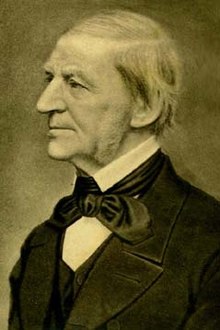
However, he certainly does gain a lot of enemies by saying, “I do not wish to expiate, but to live. My life is not an apology”. Many Puritans, as we have learned were of a self-afflicting nature. They believed they were to be continually punished and be happy about it. Living life as an apology would seem to suit them, because they know they are not perfect, and trying to live a good enough life in order to make up for it. They believed many of the sins they had to atone for were not just from their own mistakes, but from their families past too. Emerson directly goes against that with the argument that we as a people are to live for today, and not penitence for past wrong doings. By doing so he believed you would miss out on life entirely, and live in the past rather than enjoying the present. It should most importantly be something unique, and not repetitive.
Subscribe to:
Posts (Atom)