Monday, November 26, 2012

The Liberator Periodical

The article I chose was from The Liberator published in Boston on January 25, 1834, and the article is titled "The Marshpee Indians". After looking through several different periodicals, I chose this one because it was created for abolitionist purposes and I thought that was really interesting, especially given the time it was started. 


Even though I thought this newspaper was really inspiring and revolutionary, the article lacked that spice I was looking for. The article discussed how the Marshpee tribe was seeking independence from the United States government. They wanted to freely work their own land and abide by their own laws, and not of the state of Massachusetts or the country. The article describes who all attended this meeting, and what all was discussed. As I was reading, it felt like I was reading an official court transcript, rather than a newspaper article. Maybe that's a new invention for columnists, to add more excitement to the stories or just anything to keep the reader enthralled. It was just so hard to want to read this article and even finish it. Although it was really interesting subject matter, it was presented so blandly that I wanted to flip to something else immediately. That could also just by my own mind set when it comes to reading, but I expected more drama rather than just a play by play. It was not until the end that the writer came in and expressed his view on the matter he was writing about. That was when things finally got a little more exciting. He used words like "unfortunately" and "cries", more expressive language the rest of the article. If I would have read this at the time it was published, I don't think the pleas from the writer would have reached my ears, because until the end I did not even know the journalist had any interest in the matter.

Monday, November 19, 2012

The Yellow What?

So this was definitely the weirdest, most absurd story we have read all year. The Yellow Wall-paper by Charlotte Gilman is not something I could not fully understand just reading it one time. At first it seemed like some psychological thriller that was about the effects of postpartum depression, since she kept mentioning her baby randomly. But then after reading her biography, I saw it as more a feminist piece. It really made me think she was satirizing the lives of women at this time. They were expected to do all the house chores, take care of their children, and all the other womanly duties, but the narrator in this story finds it "too tiring" to do anything. The only thing she has enough strength to do is write, which her husband has forbidden her to do. It seemed like she was supposed to do all the things she was not physically able to do, but then not allowed to do the things she yearned to do. Although this woman went completely insane, to some degree many other women in these positions would go a little bit crazy also. After being cooped up in a house all day, talking to no one else but small children and not being allowed to be creative, it is hard to imagine not going a little bit coo-coo.

The whole idea of the resting cure also felt a little bit overdone. Everyday the narrator would do the same thing, eat and sleep. Obviously that was not helping her get better since she started to see things move in the wall paper, but her husband was stuck in his ways and would not try other things. I think that was another criticism on the medical community. At the time they were not as willing to try other things that could help, especially in psychiatric care. They thought they knew what they were doing, and refused to see any other way.

Wednesday, November 14, 2012

Desiree the Wronged

In this story by Kate Chopin, Desiree has a child with Armand Aubigny. Everything is wonderful after the birth of their son, and it seems everything in their life is amazing that nothing can go wrong. Yet, of course it did. As the baby grows, his skin starts to change its color showing that there is some African American blood that runs through his veins. Armand basically forces Desiree out, accusing her of not being white. Little does she know that Armand is fully aware that he is the one who is in fact not fully white. I just thought it was interesting that it was her that had to leave the house, the town, everything she had known and loved behind. All because she might have been black. As soon as I was done reading this, I could not help but think how things would have been different if she had suspected him of having African American blood. Would she have tried to force him out too? Or would she have just accepted her fate and still been happy?

I think this text plays with gender and race issues at the same time, and since it is such a short story, really causes you to go back and reread the words to find the deeper meaning. It was my first time reading Chopin, and I have to say that I was not disappointed!

Wednesday, November 7, 2012

Mark Twaining

After reading The Diaries of Adam and Eve, I wish Mark Twain would have been around in this generation, because he probably would have had a twitter account and his tweets would be hilarious. Throughout the entire reading of the diaries I was smiling and sometimes laughing out loud at the ridiculousness of this story. It almost did not feel like the same author of The Adventures of Huckleberry Finn or The Adventures of Tom Sawyer.

After thinking about it for awhile I do not think this piece of writing would have been received well by the audience of his time. Although they were probably not as Puritan crazy anymore, many, especially in the South, still held onto the Bible near and dear to their hearts. They would have seen such writing as this to be blasphemous and cruel to taint a story from the Word of God. But if they would have been able to see past the mocking and the all the irony, they would have seen that nice ending he gave to Adam and Eve's story. It may have started off as something that looked nothing like love, except for a nagging wife and silent husband, but it ends compassionately with the two realizing how much they need each other. I think Twain purposefully chose to have Eve die first and say that she would be nothing without him. Is that not what many Christians of the time (and now) believe too? Just saying that if they would have tried, they could have laughed and taken something from it too.

Wednesday, October 24, 2012

Freddy Douglas the Great Writer

Frederick Douglas is someone who I learned about each year in grade school around January and February, along with Martin Luther King Jr and Rosa Parks. His life never stood out to me in school because it was lumped together with so many other great men and women. It seemed like he was just another abolitionist and could not be as great as someone like Sojourner Truth or Harriet Tubman. Reading the autobiography of Frederick Douglas changed my mind completely.

One of the most interesting parts of his autobiography that stood out to me was when he was talking about the constant singing going on in the plantation. He says, “slaves sing most when they are most unhappy” (937). Whenever I would picture slaves working hard in the fields sweating profusely, I would always imagined them singing joyful songs of things to come. Singing about what they had to look forward to in the afterlife to keep them going everyday. I never imagined that they would sing songs about their daily lives and troubles instead. I guess it makes sense because that is all they know. They do not know much of joy or happiness, but only constant hurt and struggle. I just assumed that because most of the writing from the slaves that I have read was centered on hope and their belief in God, that their act of singing would be the same. I liked how he noted many people in the North had the same thoughts about their singing as well. They must have just come across as a hopeful group of people who could be happy no matter their circumstance.

The other interesting thing that many other minority writers have pointed out was how the white Christians would use the Bible against them. They would be pious church goers on Sunday who talked about loving their neighbors and enemies, but would come home and beat their slaves to almost death. It was almost comical how Douglas points out that he is reading the same Bible that one of his masters does, yet they see two totally different things. It was the slaves who were being good to their masters, but the masters were not paying their slaves the same respect as said to do in the Bible. This is yet another text that reverses the roles of beast and humanity. For the African American’s were always labeled as sub-human, but it appears they are the ones who acted with the most humanity and dignity towards life.

Wednesday, October 10, 2012

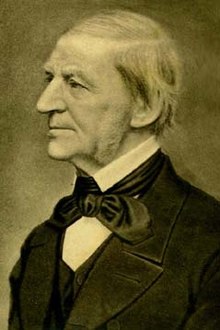
Trust Thyself

The essay “Self-Reliance” by Ralph Waldo Emerson was quite an interesting and surprisingly entertaining read. The theme of being independent is so timeless that I actually found myself highlighting quotes to remember, rather than just for class purposes. It just goes to show how much value this work can have hundreds of years after its written.

The thing I found unusual about this piece was its use of scripture. In works we have read previous to this one, it seemed everyone was anti-God when it came to ways of thinking. They would acknowledge his presence and force, but not give themselves completely over to that lifestyle. Instead Emerson uses his knowledge of the Bible in order to give more illustrations that others will understand. I think he used this technique in order to get a larger audience, or rather a more accepting audience to the ideas he was trying to get across. He even uses well known stories such as Jacob and the coat of many colors, so that people could draw different conclusions from what they have been told in church. 

However, he certainly does gain a lot of enemies by saying, “I do not wish to expiate, but to live. My life is not an apology”. Many Puritans, as we have learned were of a self-afflicting nature. They believed they were to be continually punished and be happy about it. Living life as an apology would seem to suit them, because they know they are not perfect, and trying to live a good enough life in order to make up for it. They believed many of the sins they had to atone for were not just from their own mistakes, but from their families past too. Emerson directly goes against that with the argument that we as a people are to live for today, and not penitence for past wrong doings. By doing so he believed you would miss out on life entirely, and live in the past rather than enjoying the present. It should most importantly be something unique, and not repetitive.

Wednesday, September 26, 2012

Good Ol' Rip Van Winkle

After reading Rip Van Winkle, I was surprised I had not heard the story before. I had heard the name somewhere, in passing during something, but never received all the details. So after reading the story by Diedrich Knickerbocker, I feel like I know what all the jokes are about.

In the beginning of the story when it is describing Rip as someone who has an "aversion to all kinds of profitable labour", I assumed it would be a tale about how he turns from his ways and becomes a hard worker. I even feel like it is a little bit set up to do that, because we he wakes up in the woods and finds he has slept for twenty years I thought that he would either turn from his old ways, or be able to go back in time and make amends for his past errors. I thought it would be more like A Christmas Carol where he gets to see what damage he has done and rectify it. Instead he just gets to carry out the remainder of his life with his daughter and grandson, without the "tart temper" and "sharp tongue" of his wife. I did not see anything to be gained from this story, other than that men with nagging wives probably began to pray this would happen to them. In fact, it basically rewarded Rip for his hiding and cowardly behavior by getting him out of trouble with his wife. It just seems unfair, but maybe men of this era needed a story like this to read and escape with. That is especially shown in the last line of the short story, "when life hangs heavy on their hands, that they might have a quieting draught out of Rip Van Winkle's flagon".

On the other side of the argument, this story could also come off as a cautionary tale to those idle workers. Men are taught to be the breadwinners and hard workers, and because Rip was neither, he gets to miss twenty years of his life. It demonstrates how negatively those men are portrayed in society and how this is definitely not a proper way to live. He even misses most of life of his children. His house is shown to be in ruins at the end, along with everything else he ever knew. The ending author's note even goes on to say how true this story is, although it's clearly not, and that makes it even more of a cautionary tale.

It did however seem that someone took great notice of this story which took place in New York, because they made a statue of him. I just thought that was a funny little fact and even funnier statue!